


Coconut as Orchid Substrate
Time and again, one reads of excellent cultivation results—specifically with orchids or Paphiopedilum—when using coconut-based substrates. A particularly striking feature is the robust root development, which is often evident after just a few weeks.
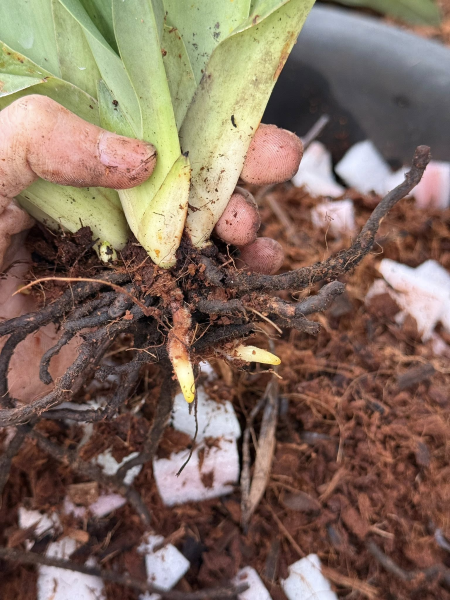
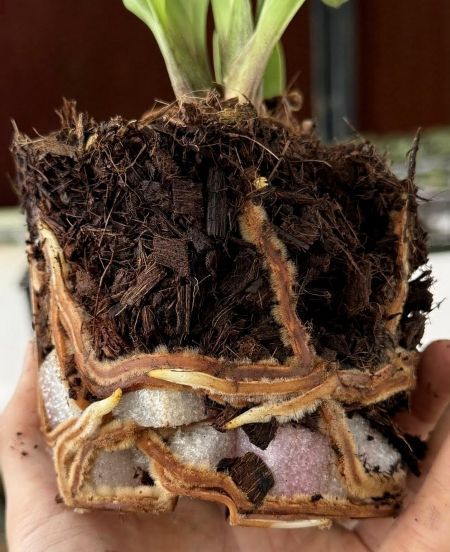
On the island of Madeira, too, Paphiopedilum insigne have been cultivated in a fine coconut-based substrate for several years. Unfortunately, the source of the substrate could not be identified.
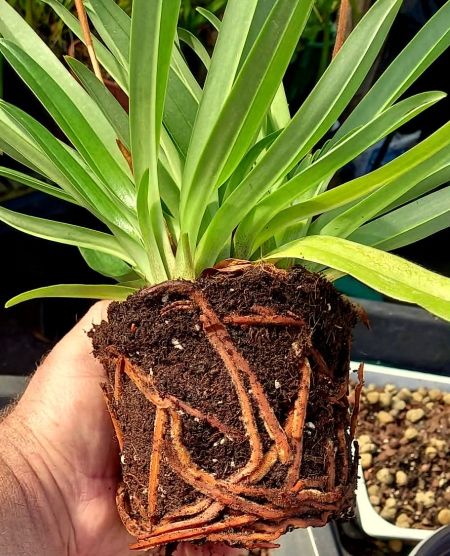
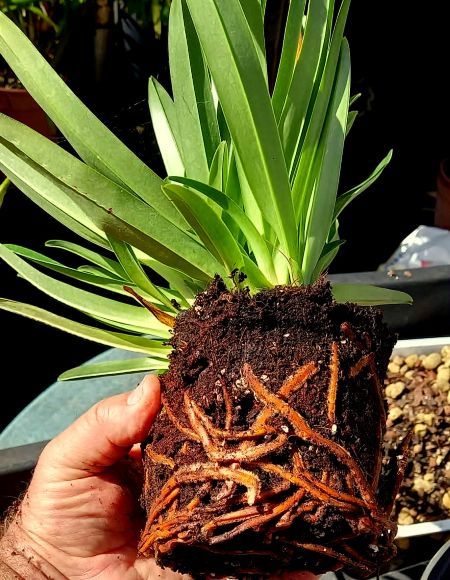
An orchid enthusiast has been cultivating his lady's slippers in pure coconut chips for several years. The plants are grown on a windowsill and regularly submerged.
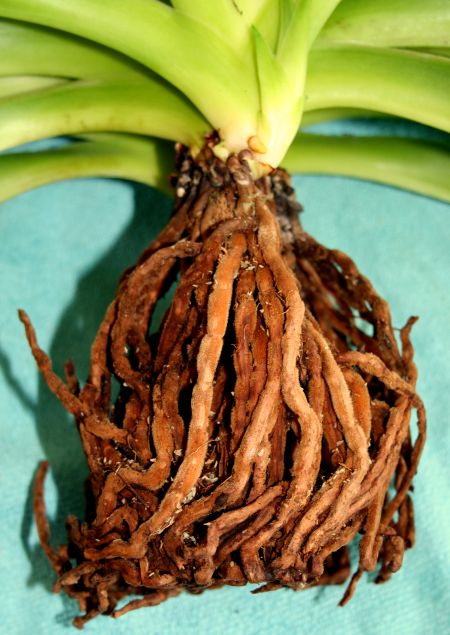
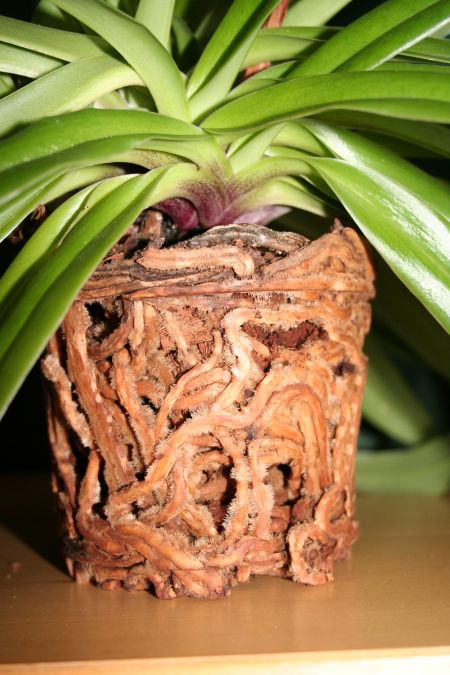
I wanted to try out these successful rooting results in my own orchid cultivation as well.
Around the turn of the millennium, there was already a hype surrounding this planting medium. During the cultivation phase, coconut decomposes significantly more slowly than bark-based substrates.
However, this coconut material was often contaminated with salts, as the coconut fibers are sometimes rinsed with seawater or river water in their countries of origin. To make this material suitable for use as an orchid substrate at all, it had to be washed repeatedly with rainwater. Both coconut chips and finer coconut fibers were offered as substrates.
Bob Wellenstein of An Tec (USA) was one of the first orchid nurseries to cultivate a large portion of its orchids—particularly Paphiopedilums—in coconut-based substrates. During the first six months, many new roots grew into this substrate; however, after 12 to 18 months, a large proportion of the roots died off. They were faced with a puzzle.
Today, the causes for this are well understood:
Even after washing the coconut fibers multiple times, 60–70% of the sodium and potassium salts remain firmly bound to the fibers; these can only be removed using a cation exchange process. The cultivation areas for coconut palms are predominantly located near the coast. Consequently, both the groundwater and the regular rainfall contain elevated levels of sodium. The plants are primarily fertilized with potassium nitrate. For this reason, high residual levels of sodium (Na) and potassium (K) can also be found in the coconut fibers.
If calcium or magnesium are supplied via fertilizer during the cultivation period, the residual Na and K ions still present on the fibers exchange places with the Ca and Mg from the fertilizer. Consequently, Na and K ions are released into the substrate, eventually rendering it toxic—causing the roots to die off. If the plant is not repotted immediately at this stage, the orchid itself will perish.
Anyone wishing to use coconut as a substrate for their orchids should ensure that the material has been washed and buffered multiple times—otherwise, the substrate must be prepared manually.
For cannabis cultivation, such buffered coconut substrates are available here in Germany with an electrical conductivity of around 200 µS. However, I find this particular substrate too fine for my orchid cultivation purposes.
While searching for a suitable orchid substrate, I came across the following coconut chips here in Germany:
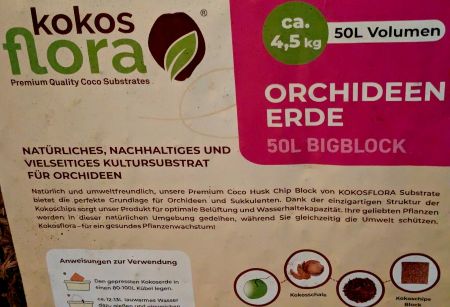
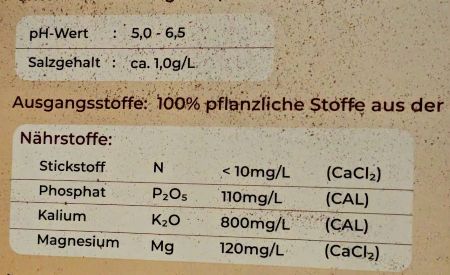
The label states that the material contains approximately 1,000 mg of salts. This corresponds roughly to a conductivity value of 1,700 µS. However, according to my measurements, this value varies among individual coco blocks. Nevertheless, this high conductivity level is far too high for orchid cultivation. The following steps must therefore be carried out:
The compressed coco block is soaked in 50 liters of rainwater. After 24 hours, a conductivity value of 1,550 µS is measured.
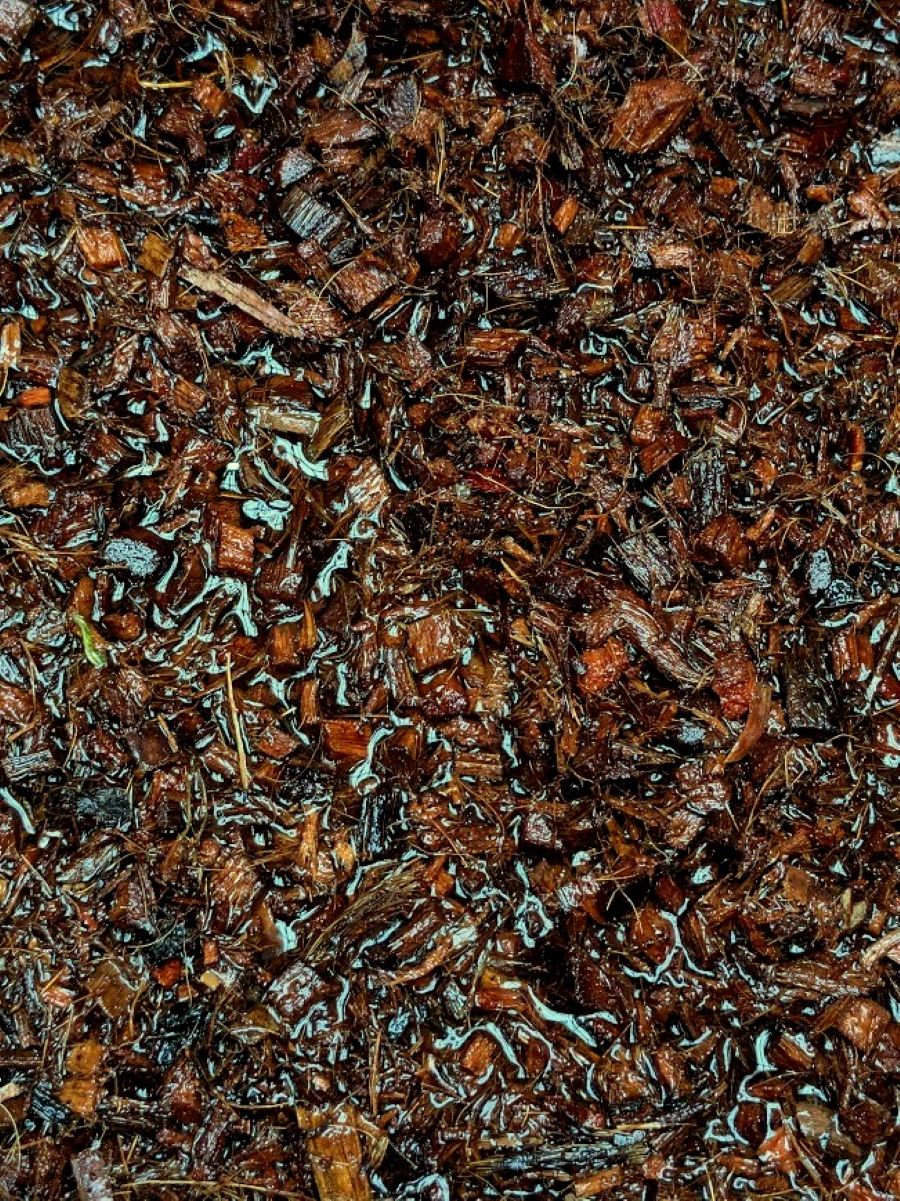
The coconut substrate is then removed from the water using a sieve or fine-mesh net and soaked once again in 30 liters of fresh rainwater. After 24 hours, I measured an electrical conductivity (EC) of 720 µS. The coconut fibers are removed again with a sieve and soaked once more in 30 liters of fresh rainwater for 24 hours. The water now has an EC of 380 µS.
Now, 20 grams of Calcinit (calcium nitrate) and 5 grams of Epsom salts are added to 30 liters of rainwater. This water now has an electrical conductivity (EC) of 1200 µS. The coconut fibers are then placed into it. This process is known as buffering the substrate.
After 24 hours, the fibers are removed from the water and placed into another 30 liters of fresh rainwater.
Repeat this process two more times using fresh rainwater—afterwards, the water will have an electrical conductivity of 220 µS, and the coconut fibers can then be used as an orchid substrate.
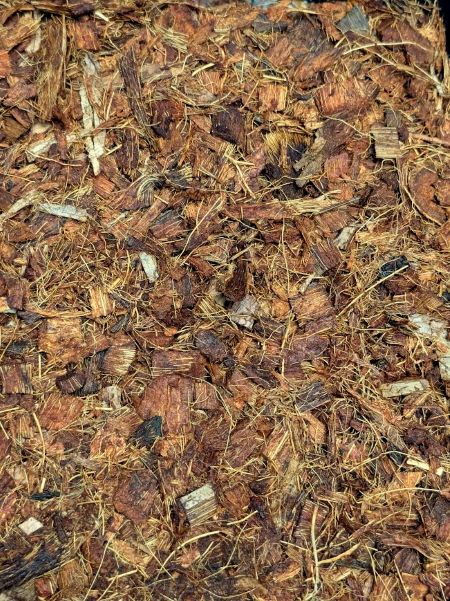
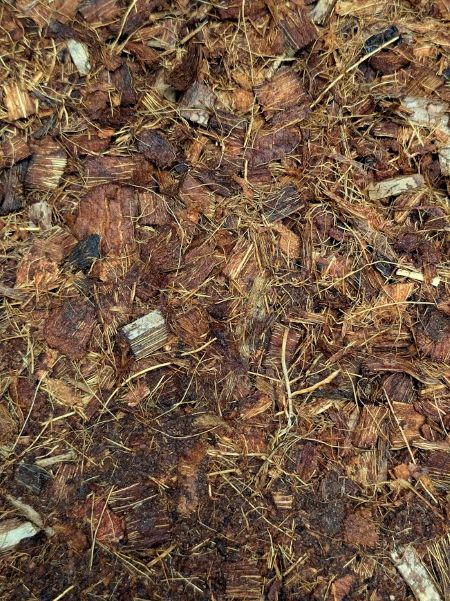
Rinsing and buffering the coco substrate is, therefore, a labor-intensive process that also consumes many liters of rainwater.
For some smaller orchids, these coco chips are too large. I gathered these chips using a leaf blower equipped with a small shredder. This provides a simple method for producing finer coco fibers. In the saucer shown in the image on the right below, you can see the significantly finer coco substrate—the kind typically available for cannabis cultivation.
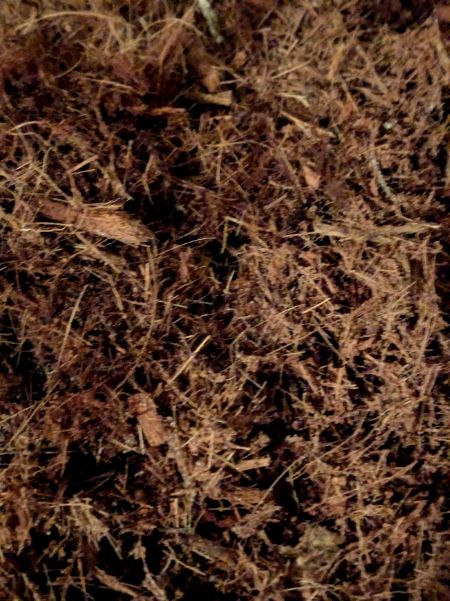
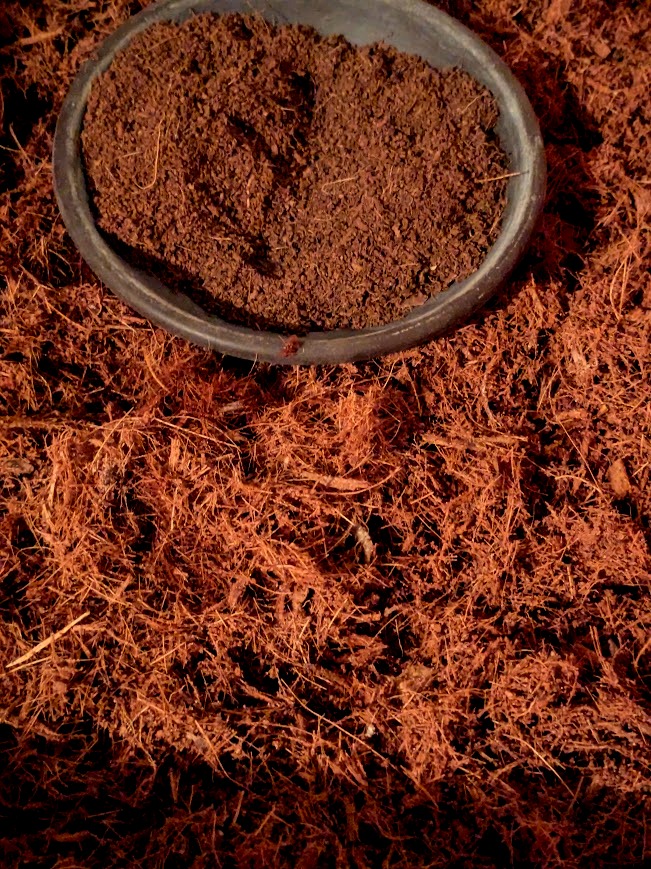
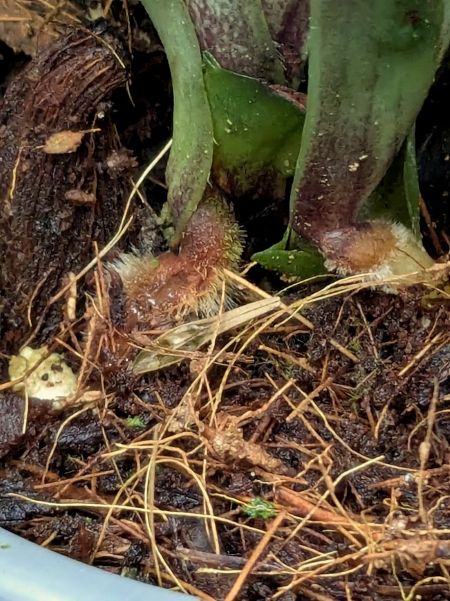
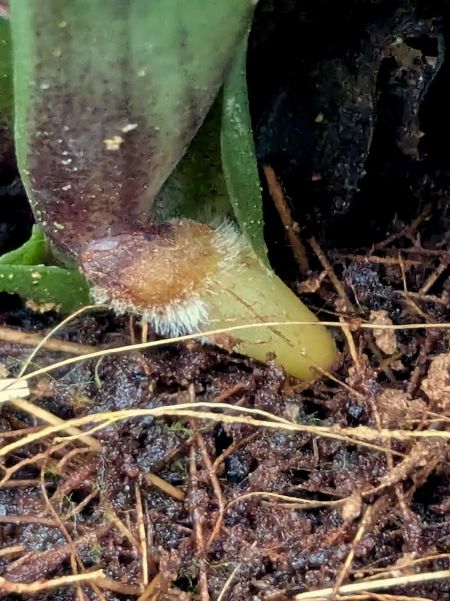
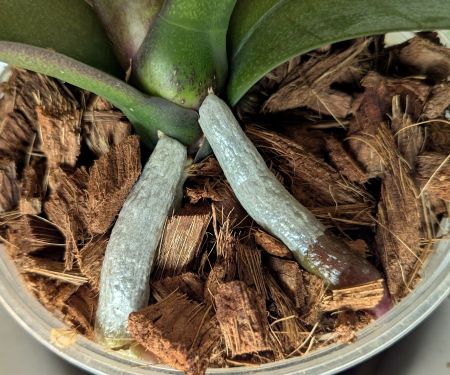
With some of my orchids, positive signs of good root establishment in coconut substrate are already visible after just a few weeks.
Here is a Paphiopedilum:
and Phalaenopsis:
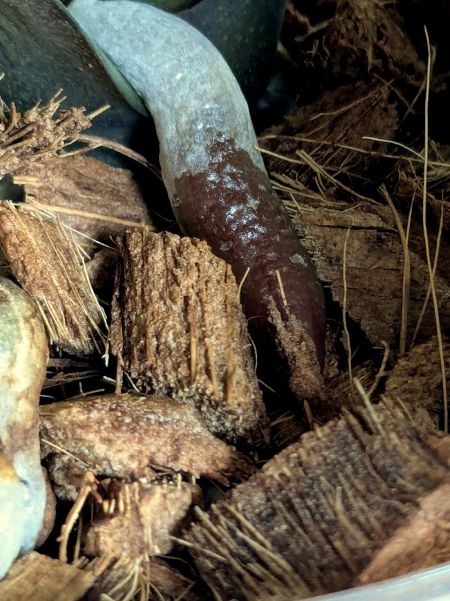
If, over the course of the year, the orchids in this substrate put out roots and grow well, the entire effort will have been worthwhile. To what extent root development continues even after a year of cultivation remains to be seen.